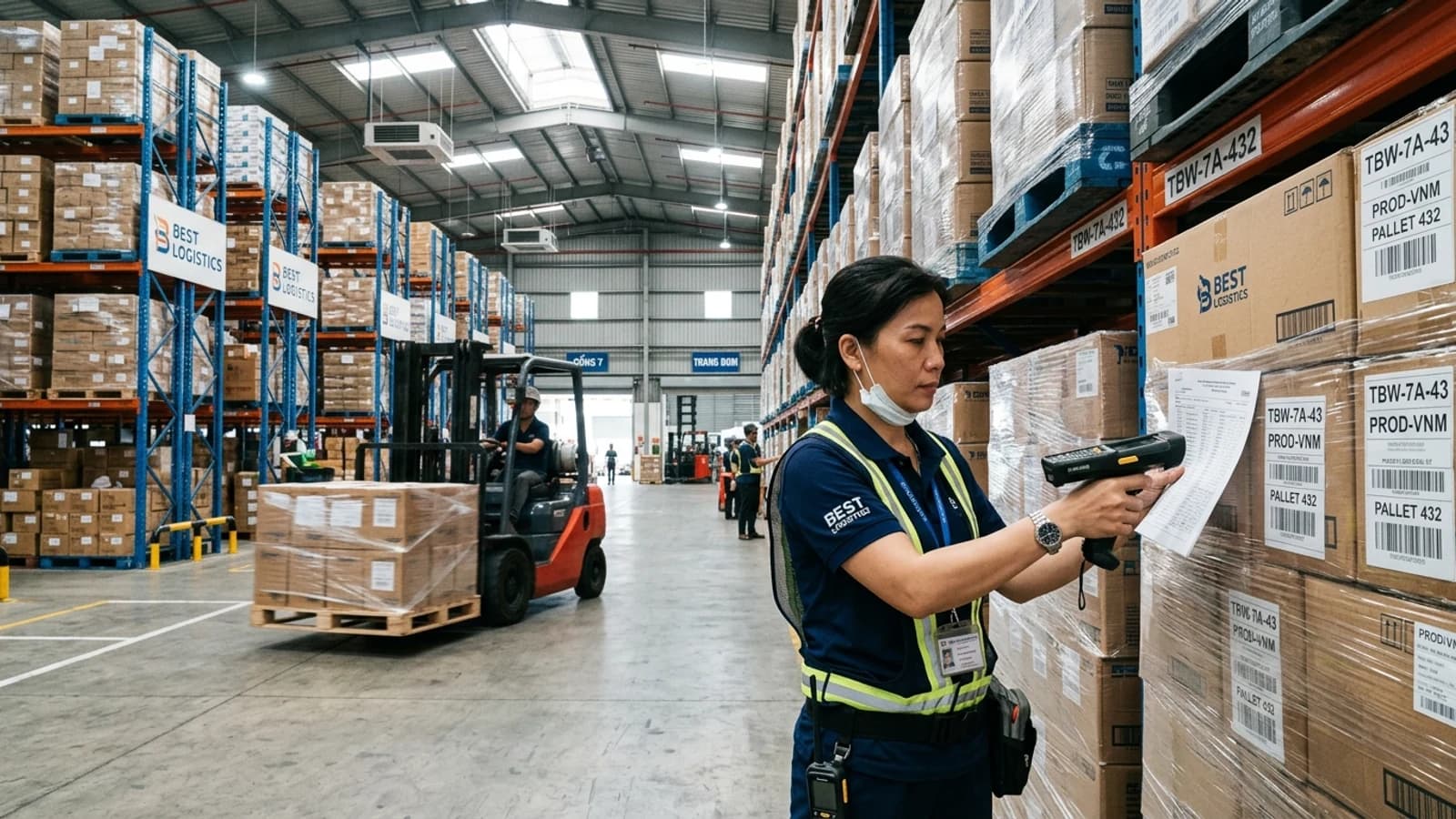
Distributors often start on retail software because it is cheap and available. It works for a few months, then breaks in exactly three places: price, discount and delivery. Those are not peripheral features — they are the substance of the wholesale trade.
Place 1: One product, many prices
Retail has one shelf price. In wholesale the price depends on who is buying and how much: tier-1 dealers, tier-2, cash customers buying in bulk, annual-contract accounts — each with its own price list, and within each list, volume breaks.
A structure that survives change:
- Each customer belongs to exactly one price group; the group is an attribute of the customer, not something a salesperson picks at the till.
- Price lists are effective-dated — you can see what the price was on 1 June, to settle a query about last month’s order.
- Volume breaks are declared as ranges and selected by the system — not remembered by staff.
- A special price for one customer must be a documented, time-limited exception, not an empty box anyone can fill in.
Place 2: Discounts stacked on discounts
The price-list discount, plus the monthly programme discount, plus early-payment discount, plus quarterly volume rebate. The question is always: do they add or compound, and on which base?
This is where packaged software usually gives up, and where custom building pays best. The design principle: each discount type is its own line shown on the document, never merged into a single figure. The customer must be able to read the invoice and understand the total, otherwise every order becomes a phone call.
Place 3: Delivery routes
In retail, delivered is done. In distribution one vehicle runs a route calling at 15 stops, where some receive in full, some short, some return goods, and the driver collects cash at several of them.
What the system has to support:
- 1Grouping orders into a delivery run by route and date.
- 2The driver confirming each stop on a phone, with a photo of the signed note or a signature.
- 3Recording short deliveries and returns at the stop, not adjusting them back at the depot.
- 4Reconciling the cash the driver brings back against the orders delivered.
Step 3 makes the biggest difference. If returns are only recorded when the van gets back at six in the evening, then stock and receivables are wrong all day — and sales makes decisions on those wrong numbers.
Connecting it to receivables
The three above only work when connected to credit limits: an order from a dealer 45 days overdue should not join a delivery run without somebody approving it. How to set limits and ageing buckets is in Accounts receivable.
A real system for this shape of business — quote, order, delivery, invoice and receivable in one unbroken chain — is described in the ERP delivery story for a distributor.
Want to talk specifics?
SealCore surveys at your premises and sends a fixed quote after the first session — including when the conclusion is that you do not need custom software.