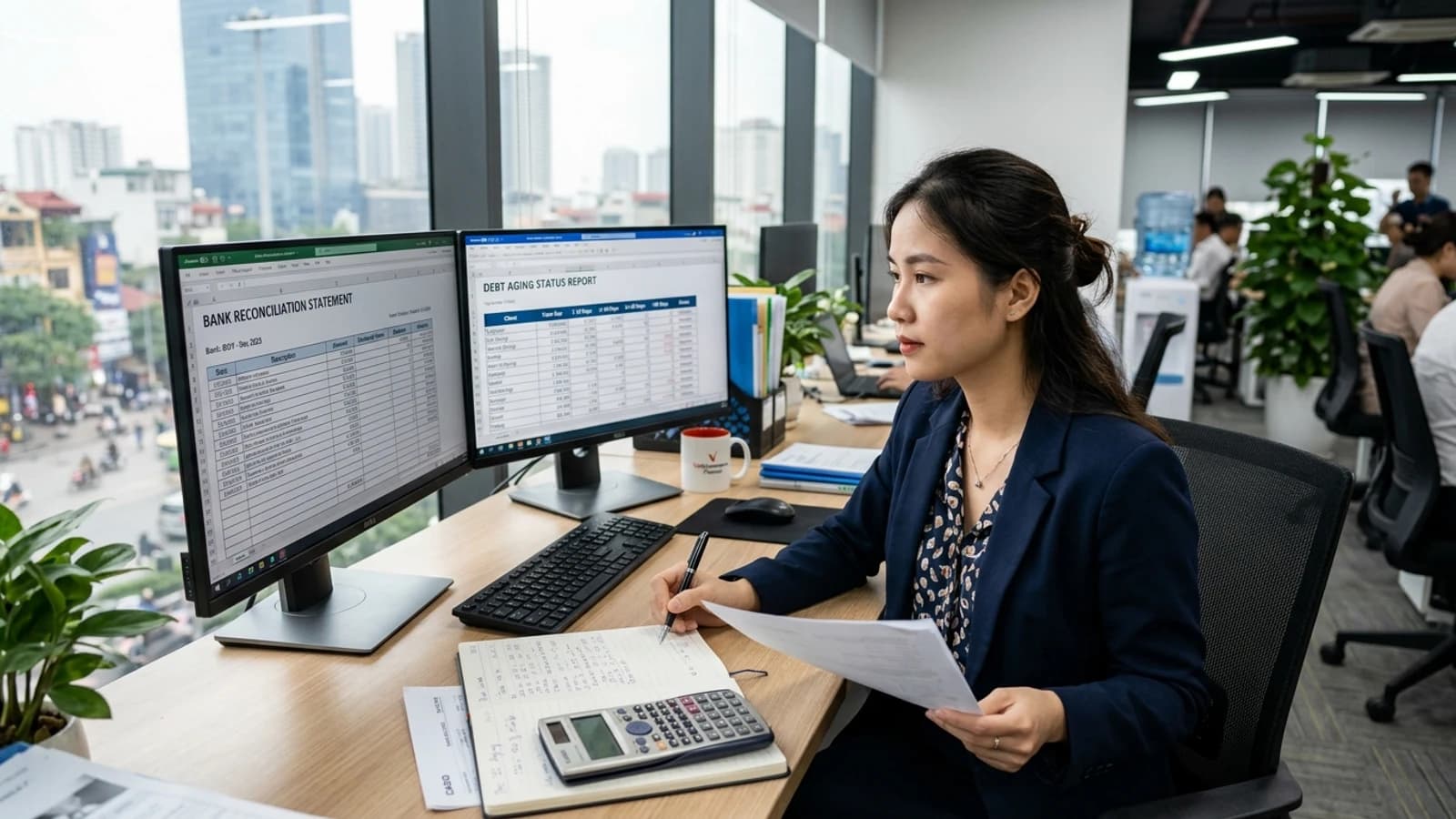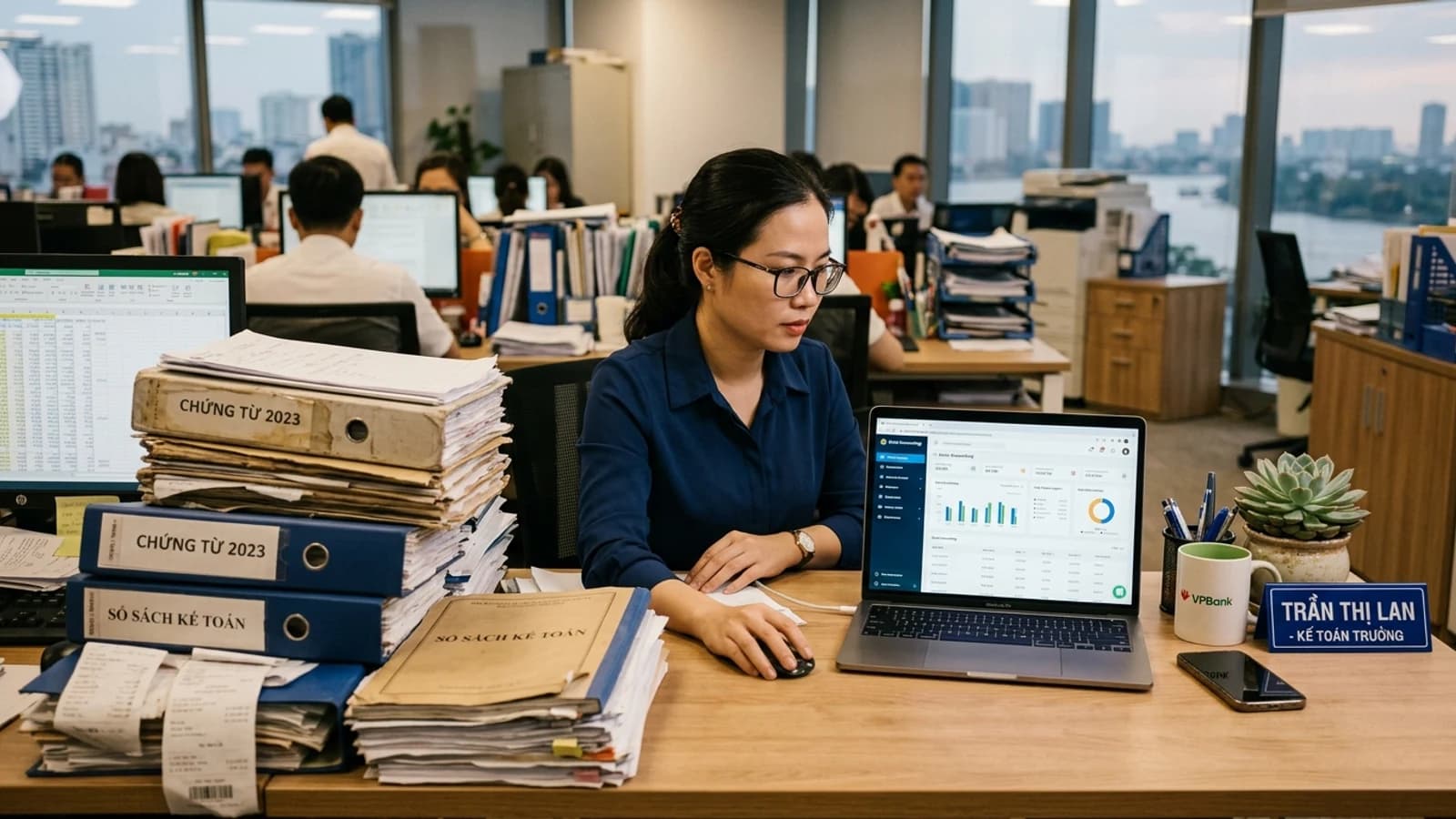
E-invoicing rules in Vietnam change over time and are best checked against the current legislation or with a tax adviser. This article is not about the rules — it is about how to organise the data, which is where almost every practical problem we meet on rollouts actually originates.
The root problem: two systems, two sets of numbers
Plenty of shops sell through one system and issue invoices through a separate portal. Staff sell all day, then re-key into the invoice portal at closing. The consequences are near-inevitable:
- Revenue in the sales system differs from the total of invoices issued.
- A return is processed on one side and forgotten on the other.
- Nobody can quickly answer "has this order been invoiced".
- Period end takes days to find the discrepancies, and usually does not find them all.
The root fix is simple in principle: the invoice must be generated from the order itself, and every order must carry its invoice status. If your sales system cannot do that, everything downstream is patchwork.
Three states every order must have, at minimum
| State | Meaning | Who handles it |
|---|---|---|
| Not issued | Sold, customer did not want an invoice | Nothing to do, but it must still be totalled |
| Issued | An invoice number is linked to the order | The system stores number and link |
| Adjusted / replaced | The old invoice is superseded by a new one | The whole chain must be kept, never overwritten |
The third state is where corners get cut most. When an adjustment is needed, many systems edit over the old invoice — losing the trail and leaving nothing to explain with when it is asked for.
Returns and cancellations
Returns are rare in frequency but cause the most drift. Three things must happen together and must not be separable: stock goes back, money is refunded or the receivable is reduced, and the invoice is handled accordingly.
If those three live on three screens, done by three people at three different times, one of them will eventually be missed. Good software puts all three behind one action.
Storage and retrieval
E-invoices must be kept for years and found quickly. Two questions to ask a software vendor:
- 1How many steps to find an invoice from two years ago, and can I search by customer name or phone number?
- 2If I stop using this software, in what format do I get all my invoices out? The answer must be a readable standard format, not "we will assist with an export".
For sole traders and small shops
Being small does not license being loose. If anything the opposite: a sole trader usually has no in-house accountant, so the software has to carry more — totalling revenue by period, splitting by tax rate, and exporting a data set a tax adviser can use as-is.
That is the argument for a platform with tax and invoicing built in rather than several tools bolted together — SealSales takes this route: invoices are generated straight from the order, and the books draw on the same database as sales and stock.
Want to talk specifics?
SealCore surveys at your premises and sends a fixed quote after the first session — including when the conclusion is that you do not need custom software.