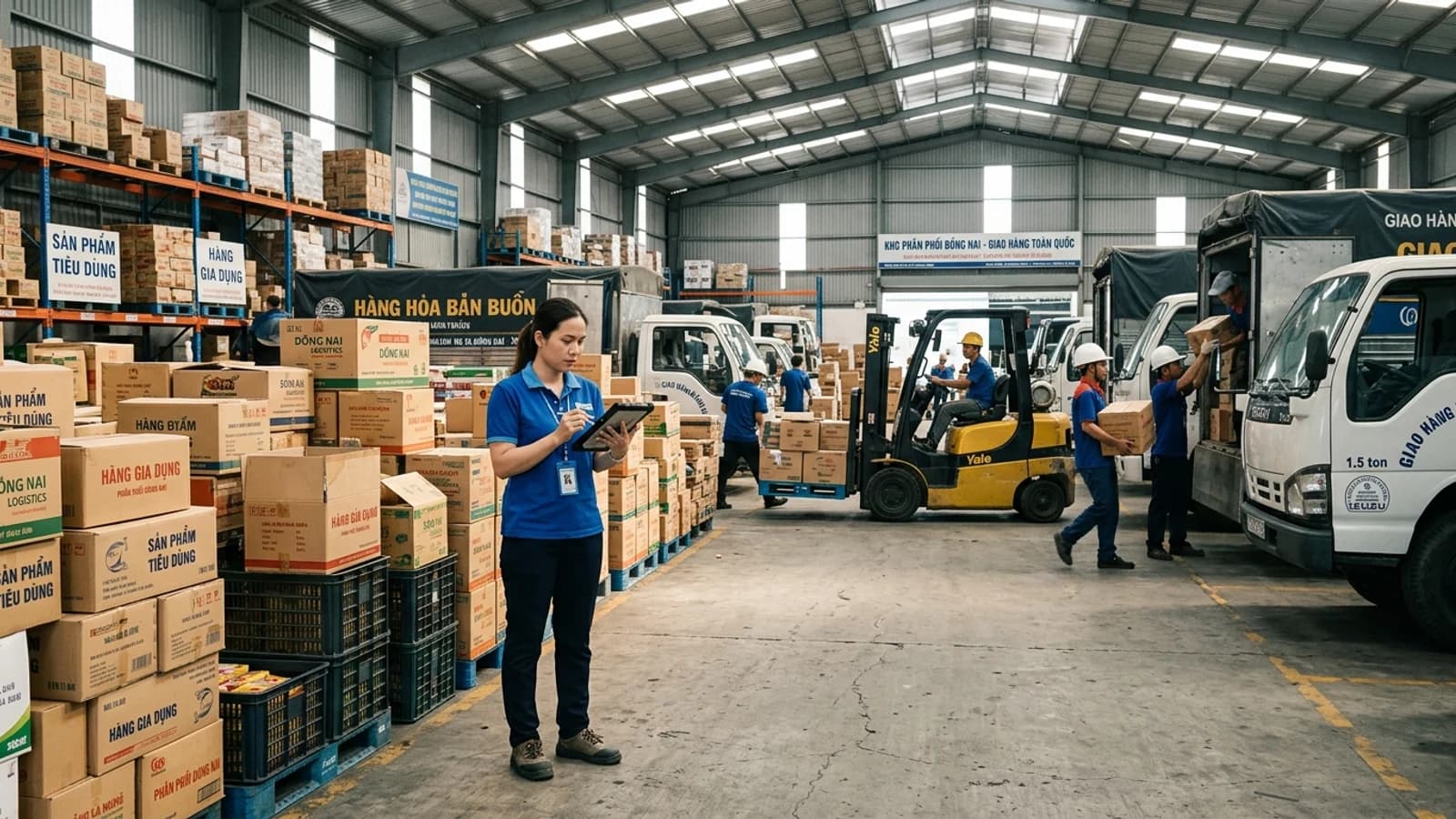
SealSales serves four industries at once: F&B, retail, services such as spas and salons, and wholesale distribution. That sounds like a marketing choice, but it was the product’s hardest architectural decision, and it came from a practical observation.
The observation behind it
A great many Vietnamese businesses do not belong to exactly one industry. A coffee shop that also sells roasted beans to other shops is both F&B and wholesale. A salon selling cosmetics is both services and retail. A distributor opening a showroom is both wholesale and retail.
With single-industry software, these businesses run two systems and add up the figures themselves. That is the problem SealSales set out to solve.
The price of that choice
The four industries differ at a very basic level:
| Industry | What is sold | Heaviest specific need |
|---|---|---|
| F&B | Dishes and drinks | Recipe quantities, kitchen printing, tables and shifts |
| Retail | Barcoded products | Size/colour variants, stocktakes, promotions |
| Services | Sessions and courses | Booking, technicians, commission |
| Wholesale | Cases and pallets under contract | Tiered price lists, receivables, delivery routes |
Forcing one interface across all four produces an interface that suits nobody — the classic failing of "multi-industry" software.
The answer: shared underneath, separate on top
The dividing principle: what is accounting and data is shared; what is daily operation is specific to the industry.
- Shared: stock and products, customers and loyalty points, receivables, cash, tax and invoicing, staff and shifts, reporting.
- Per industry: the point-of-sale screen, how products or services are defined, and the specific rules — recipe quantities, booking, tiered pricing.
So a business running both F&B and wholesale shares one ingredient store, one customer list and one receivables ledger — while the café cashier and the wholesale rep each see a screen that fits their job.
The setup problem, and where the AI assistant fits
The more flexible the platform, the more has to be declared at the start: industry, catalogue, permission groups, report templates, recipe quantities. For the owner of a small shop, this is precisely the barrier that ends the trial on day one.
The Seal Nhân assistant was placed exactly here: the user describes their business in ordinary Vietnamese, the system builds an initial structure in around 30 seconds, and the user adjusts it rather than declaring everything from nothing.
The decision about the free plan
The SealSales free plan runs the whole process end to end rather than removing core features, and it has no time limit. The reason: for a small business the biggest obstacle is not price but switching risk. If you must pay before knowing whether the system fits, most will not try.
The limits chosen are by scale — number of staff, number of products — not by feature, so that growing means upgrading a plan rather than changing system.
What we took away
- 1When building for several audiences, split along the axis of "shared data, separate operation". Splitting along any other axis tends to produce a product that suits none of them.
- 2The biggest barrier in flexible software is the setup step. Investing there has far more impact than adding another feature.
- 3Limit a free plan by scale, not by feature — remove core features and users cannot evaluate the product, and they leave without telling you why.
Want to talk specifics?
SealCore surveys at your premises and sends a fixed quote after the first session — including when the conclusion is that you do not need custom software.