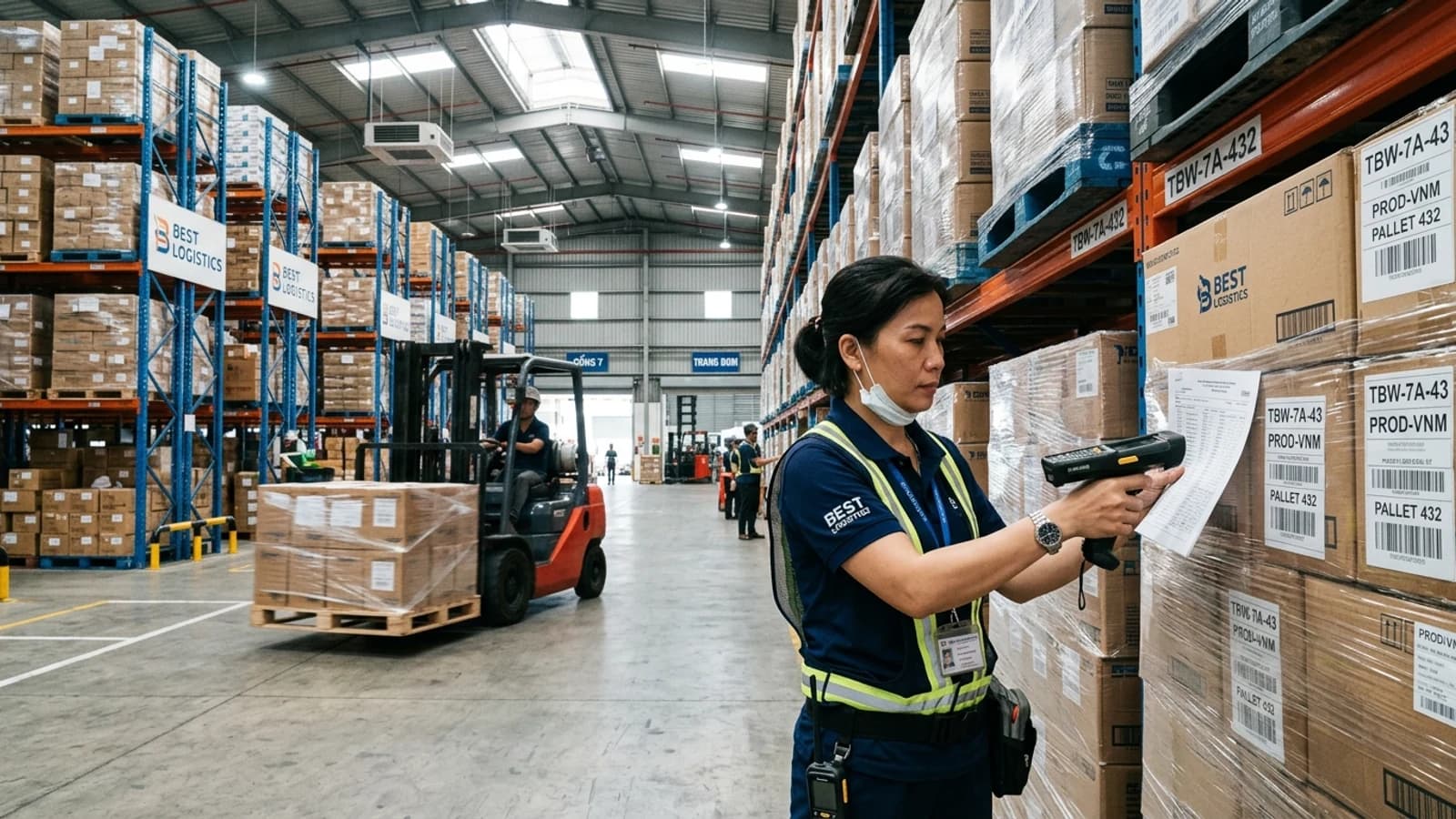
ERP is usually sold as something grand and expensive. What it is at heart is much simpler: departments share one set of data instead of each keeping its own copy. When sales records an order, the warehouse immediately sees goods to pick, accounting immediately sees a receivable, and management immediately sees revenue — nobody retypes anything.
Everything else — the interface, the reports, the vendor’s branding — follows from that one idea.
Signs a business needs one
Headcount is a poor test. A 15-person workshop with three warehouses and two branches needs ERP far more than a 60-person services firm selling one kind of contract. The right test is how many places the same number has to agree in:
- The same figure — stock, receivables, revenue — is being recorded in two or more places.
- Somebody in the company spends most of their day retyping data from one system into another.
- Month-end reporting takes more than two days, most of it spent hunting discrepancies.
- Answering "how much do we have left" requires a phone call.
Two or more of those and it is time, whatever the headcount.
The modules, in the order to build them
| Module | Answers | Depends on |
|---|---|---|
| Catalogue & stock | How much, where, at what cost | Nothing — build it first |
| Purchasing | What is ordered, has it arrived, what do we owe | Stock |
| Sales | What sold, delivered yet, paid yet | Stock |
| Receivables & cash | Who owes us, whom we owe, where the money is | Purchasing + sales |
| Production | Which orders are running, what material they consumed | Stock |
| Staff & payroll | Who worked which shift, what they are paid | Relatively independent |
| Management reporting | Real profit, trends, alerts | Everything above |
The right-hand column is the important part of this table. It explains why not to start with management reporting even though that is what the board most wants to see: reports are only trustworthy once the modules beneath them are clean.
Packaged ERP or custom build
Most small and medium businesses in Vietnam do not need an entirely custom ERP. Stock, buying, selling and cash are standard operations — a finished product is faster and far cheaper. The part worth building is usually one or two genuinely different things: pricing by dealer tier, cost allocation per construction site, tiered commission calculations.
The most economical approach is usually a finished platform for the standard parts, a custom module for the unusual ones, and an API between them. A fuller comparison is in Packaged software or custom build.
Three questions before choosing a vendor
- 1Can I get my data out, and how? A vague answer means you are locked into that system permanently.
- 2Who can change forms and reports after handover? If altering one column costs a fee and a two-week wait, the true cost far exceeds the list price.
- 3How many businesses in my industry run this? Not to follow the crowd, but because proven industry logic means you are not the one testing it.
Realistic time and cost
For a 20–80 person business, a system running the core modules — stock, purchasing, sales, receivables — typically takes 6–12 weeks from scope sign-off, with roughly a third of that spent cleaning and migrating the old data.
If somebody quotes two weeks for a complete ERP, they are almost certainly not counting the data and the training — the two heaviest parts, and the two that decide whether the system actually gets used.
Want to talk specifics?
SealCore surveys at your premises and sends a fixed quote after the first session — including when the conclusion is that you do not need custom software.